
What is QSAFe?
QSAFe was developed to address a recognised challenge in simulation-based education: while numerous simulation standards exist internationally, translating these standards into everyday educational practice can be difficult, particularly in environments with varying levels of simulation expertise and high workforce turnover.
The framework provides a structured, evidence-based approach that enables educators and institutions to evaluate, enhance and demonstrate the quality of their simulation activities. QSAFe aligns with leading national and international simulation, healthcare, and professional education standards while supporting the expectations of accreditation bodies across Australia and New Zealand.
Central to QSAFe is a commitment to cultural safety. The framework recognises the importance of First Nations peoples knowledges, perspectives and partnerships in creating simulation experiences that are respectful, relevant and responsive to the communities health professionals serve.
The Five QSAFe Elements
QSAFe is organised around five core elements that underpin quality simulation-based learning:
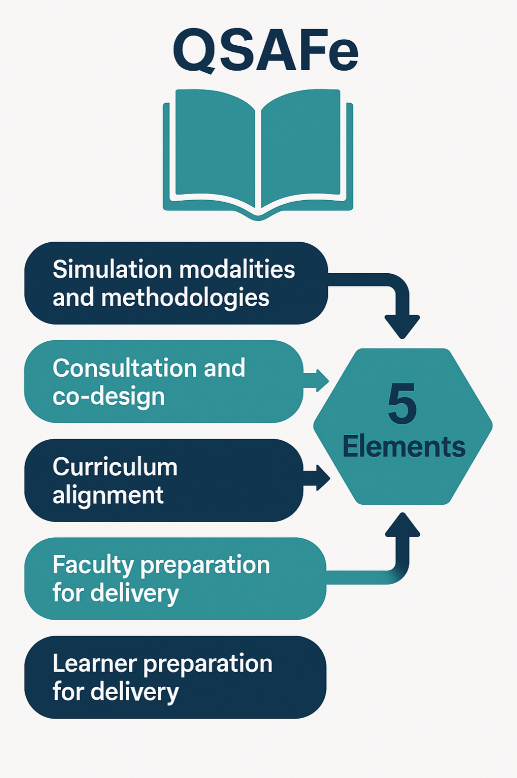
- Simulation Modalities and Methodologies
Selecting and applying simulation approaches that are fit for purpose and aligned to learning outcomes. - Consultation and Co-Design
Engaging key stakeholders, including First Nations peoples communities and people with lived experience, in simulation development. - Curriculum Alignment
Ensuring simulation activities support curriculum goals, professional standards and program outcomes. - Faculty Preparation for Delivery
Supporting educators with the knowledge, skills and resources required to facilitate high-quality simulation. - Learner Preparation for Delivery
Preparing participants for meaningful engagement through effective orientation, expectations and support.
Funders
- Australian Catholic University Faculty of Health Teaching and Learning Grant
- Australian Catholic University Centre for Education and Innovation Teaching Development Grant
- Central Queensland University School of Nursing, Midwifery and Social Sciences Research Stimulus Scheme HE4792
- Australian Catholic University Faculty of Health Sciences Research Development Grant
- Laerdal Medical Australia/New Zealand